A concise overview of why crises occur in healthcare and how crisis resource management, grounded in simulation-based training, enhances communication, leadership, and patient safety.
📊 Quick Facts
| Type | Interview |
| Author | Alexandre GAIN |
| Published | April 1, 2026 |
| Source | Visit Source |
| Location(s) | David Gaba Hospital |
🖼️ Illustrations
📝 Abstract
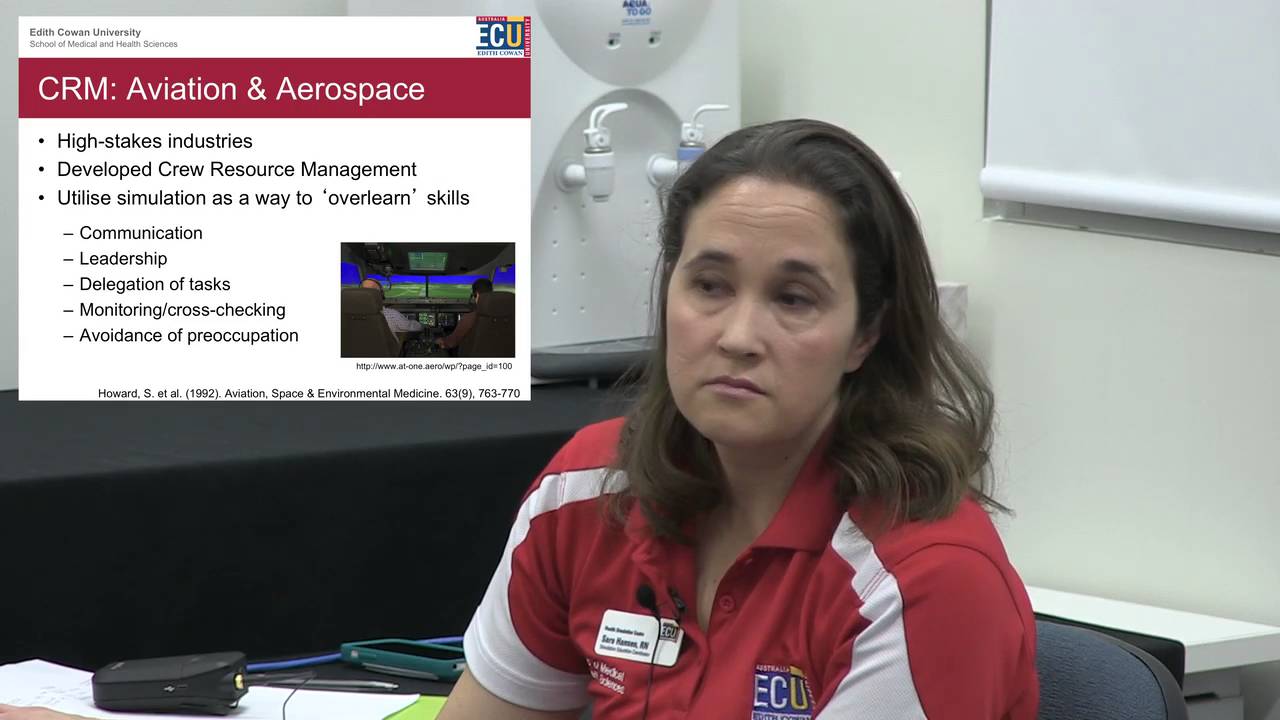
[Summary generated by AI] In this instructional session, the author analyzes why crises emerge in healthcare, distinguishing situational factors (rapid patient deterioration, time pressure, complexity, equipment hazards) from human factors (communication breakdowns, leadership gaps, multitasking under stress, fixation errors). Drawing on the aviation origins of crew resource management, the author illustrates overlearning and preparedness through simulation, exemplified by the 2009 Hudson River landing, to argue for analogous healthcare practices. Resources emphasized include people, procedures, and equipment, alongside simulation environments (in situ and lab-based), orientations and unit “treasure hunts,” checklists, and hazard identification and remediation processes. Methods comprise didactic framing of CRM principles; categorization of error sources; case exemplars; and scenario-based simulation to rehearse communication, leadership, delegation, monitoring and cross-checking, disciplined safety checks, early help activation, and effective workload distribution. The deliverables are practical, team-focused competencies and system improvements: strengthened cognitive and technical performance under pressure, muscle-memory for critical actions, earlier escalation, clearer role delineation, and recognition of latent safety threats within real clinical settings. Outcomes target enhanced reliability and patient safety by transitioning from a reactive, blame-oriented culture to proactive planning, contingency readiness, and continuous learning.