
A field-based overview of Air Canada’s eight-week flight attendant training in Montreal, emphasizing safety-first instruction, emergency procedures, and full-cabin simulation.
📊 Quick Facts
| Type | Interview |
| Author | Alexandre GAIN |
| Published | April 1, 2026 |
| Source | Visit Source |
| Location(s) | ARTW |
🖼️ Illustrations
📝 Abstract
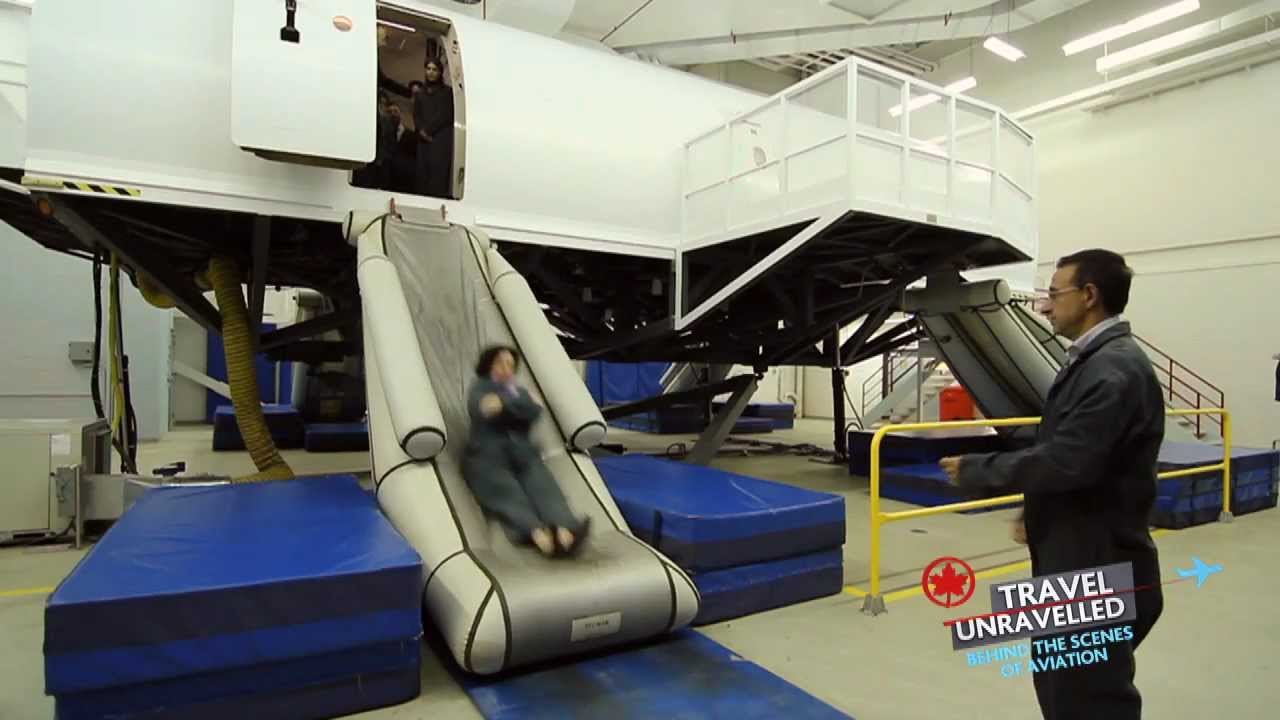
[Summary generated by AI] This video documents a field visit by the author to Air Canada’s world-class flight attendant training centre in Montreal, where more than 1,500 Air Canada and third-party students annually undertake an intensive eight-week initial course. Guided by the person interviewed—flight attendant instructor Stéphane Picard—the author observes and participates in day-one orientation activities designed to foreground safety over service. Resources used include a dedicated first-aid training room (culminating in an aviation first aid certificate), an emergency inflatables room for life-vest practice, a fire-suppression simulator with personal protective equipment and extinguishers, and a multi-million-dollar 50-passenger cabin simulator equipped with Airbus- and Boeing-style operational features and programmable scenarios (e.g., turbulence). Methods center on participant observation and hands-on demonstration: trolley handling etiquette, CPR review, correct life-vest donning and activation, the fire-extinguisher sweep technique, cabin safety briefings, and evacuation-slide deployment. Outcomes include a structured depiction of the curriculum’s early competencies, evidence of simulation-enhanced training for emergency readiness, and a reinforced understanding of safety culture as the program’s organizing principle. The deliverable is an accessible, process-oriented tour that illustrates the training pipeline from service basics to scenario-based safety proficiencies.